Moving to City Video Series for Real Estate Growth


Moving to City Video Series Real Estate: The Complete Guide for Agents
Settling into a New City: Learn to Navigate with Us
Relocation clients start their search online, scrolling through endless videos about neighborhoods, schools, and commutes before they ever call an agent. If you're not packaging your local expertise into a bingeable moving to city video series real estate strategy, you're watching potential leads discover your market through someone else's content.
The challenge facing relocating buyers is overwhelming. They're juggling research on neighborhoods, setting realistic budgets, mapping out logistics, and timing everything around job starts or family needs. According to relocation experts, buyers often struggle with listing must-haves, budget planning, and logistics coordination, which can lead to costly emotional and financial missteps. This overwhelm pushes them toward agents who provide clear, visual guidance that breaks down complex decisions into digestible steps.
In this guide, you'll learn how to plan your relocation video series from start to finish. We'll cover how to structure each episode as both a moving guide video and city guide format, optimize your content with moving to video SEO techniques, and establish a workflow that lets you publish consistently without burning out.
The outcome? A repeatable system that transforms your relocation expertise into a 24/7 lead generation machine that works while you sleep.
Sources:
Relocation Video Content Realtor: Why a Moving to City Video Series Real Estate Strategy Matters
Relocation video content realtor strategies work because they address the specific visual research that movers conduct before visiting a new area. Your videos can showcase neighborhood walkthroughs, real commute times during rush hour, actual price points for different housing types, and authentic lifestyle glimpses that help viewers imagine their daily routine in your market.
The lead generation impact is significant because your content becomes a trust-building resource that directly addresses relocators' biggest stressors. Buyers need help with budgeting decisions, timing their move with closing dates, and understanding which neighborhoods match their lifestyle and commute needs. When your videos systematically address these pain points, viewers start seeing you as their local guide rather than just another agent.
A series approach outperforms one-off videos because it encourages binge-watching behavior. When someone finds your "Moving to Denver, Episode 1: Cost of Living Breakdown," they're likely to continue with Episode 2 about neighborhoods and Episode 3 about commutes. This extended engagement builds familiarity and positions you as the obvious choice when they're ready to take action.
Consider structuring your series around these core pillars:
- Cost of living and housing types by neighborhood: Break down what $300k, $500k, and $700k actually buy in different areas
- Commutes and transit snapshots: Show real drive times to major employers during peak hours
- Schools, parks, and healthcare: Tour family-friendly amenities and explain enrollment processes
- Weekend-in-the-life segments: Highlight local culture, dining, and entertainment options
- Buying vs. renting timelines: Help relocators understand how to coordinate their move with closing dates
Sources:
Homeia, United Country, Nicole Junker
Emerging Trends: Realtor Video Content
Short-form "snackable" content is driving viewers to longer neighborhood deep dives. A 30-second clip highlighting three neighborhoods under $400k can funnel viewers to your 10-minute comprehensive area tour.
Authentic, lightly produced walkthroughs often perform better than high-budget productions when they directly answer relocation questions about budgets and logistics. Viewers want practical information more than polished cinematography. Your smartphone footage of a grocery store, gas station, and coffee shop tells relocators more about daily life than a drone shot of rooftops.
Episodic naming and thumbnail consistency boost both discoverability and binge rates. When viewers see "Moving to Austin, Ep. 3: Suburbs Under $500k" in their recommended videos, the episode number signals there's more content to explore.
For agents who need to maintain consistent output without hiring a videographer, Peachgum turns listing photos into cinematic shorts with professional effects and soundtracks. This approach lets you create compelling teasers for each episode while highlighting the speed advantage over traditional video production.
Sources:
Moving Guide Video: Your Visual Companion for Relocation
A moving guide video serves as your viewers' structured, start-to-finish roadmap for relocating to your area. It aligns with the natural research steps that movers follow and helps them understand the timeline from initial research to closing day.
Your core promise should be reducing overwhelm by organizing decisions around budget, neighborhoods, and logistics. This approach helps viewers avoid the costly missteps that come from poor planning or unrealistic expectations about timing and costs.
Sources:
Making Your Move Easy: What to Look for in a Moving Guide Video?
Every effective moving guide video should include these essential components:
Neighborhood overview by lifestyle and price bands: Address early research needs by categorizing areas based on family status, commute preferences, and budget ranges. Show actual homes and streets, not just maps and statistics.
Commute demonstrations to major job centers: Film realistic drive times during morning and evening rush hours. Include public transportation options and walking/biking infrastructure where relevant.
Cost of living snapshots: Cover housing costs, property taxes, utilities, and everyday expenses like groceries and gas. Use specific examples rather than general ranges to help viewers frame their budgets accurately.
Renting vs. buying timelines and checklists: Align advice with closing timelines and move dates. Help viewers understand how long each step typically takes in your local market.
Day-in-the-life segments: Show parks, schools, healthcare facilities, shopping, and cultural activities. Let viewers visualize their routine in different neighborhoods.
Here's a quick script skeleton for a 60-180 second overview video:
- Hook: "Moving to [City]? Here's your 90-second plan."
- Budget bands + sample neighborhoods: "$400k gets you this, $600k gets you that"
- Commute reality check: "Downtown jobs mean 25 minutes from here, 45 from there"
- Timeline milestones: "Start your search 8 weeks out to avoid delays"
- CTA: Link to full playlist or downloadable relocation checklist
Sources:
Nicole Junker, Homeia, United Country
Production Workflow: Fast, Repeatable, No-Stress
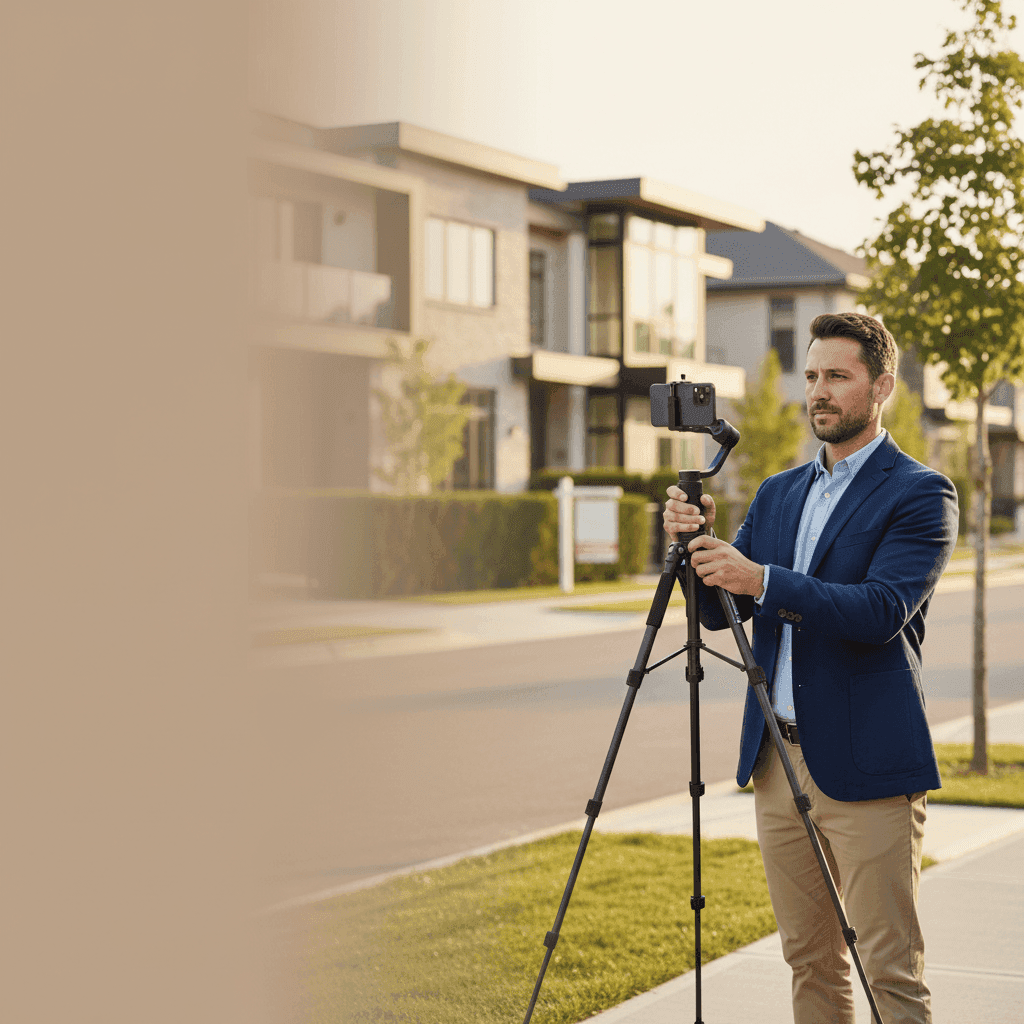
Keep your gear simple: smartphone, lapel microphone, and basic gimbal stabilizer. Source B-roll footage from your current listings and local landmarks that align with each section of your guide.
Batch your production for efficiency. Script on Monday, shoot on Tuesday, edit on Wednesday, then schedule posts for the following two weeks. This approach prevents the constant pressure of daily content creation.
If video editing feels overwhelming or you're short on time, consider turning listing photos into vertical shorts using Peachgum. This tool adds cinematic effects and soundtracks to static images, creating engaging teasers and neighborhood spotlights without requiring editing skills or additional equipment.
Sources:
City Guide: Your Virtual Tour to Real Estate Opportunities
City guides serve a crucial pre-visit education role, helping movers compare neighborhoods, understand cost of living differences, and get a feel for local culture before they invest in travel. This content fills the gap between online research and in-person visits.
Structure your episodes around common decision points:
- "Is [Neighborhood] Worth It?": Present honest pros and cons with price comparisons
- "$X Budget in [City]: What You'll Actually Get": Show real homes at different price points
- "Best Suburbs for [Lifestyle/Commute/Schools]": Match neighborhoods to specific priorities
Help viewers visualize timelines by explaining when to visit different communities and how to coordinate their move timing with closing dates. Many relocators underestimate how long the process takes in competitive markets.
Sources:
City Guide YouTube Real Estate: Turn Viewers into Relocation Leads
Design your playlist to flow from broad to specific content. Start with city overviews, then progress to neighborhood deep dives. Use end screens and cards to guide viewers through this journey and encourage binge-watching sessions.
Capture leads by linking a relocation checklist or neighborhood comparison PDF in your video description and pinned comments. Make the resource valuable enough that viewers will provide their contact information.
Cross-format your content for maximum reach. Publish comprehensive long-form neighborhood tours, then create shorter highlight clips for YouTube Shorts, Instagram Reels, and TikTok. The short-form content serves as a funnel to your detailed guides.
To maintain consistent output across multiple platforms, Peachgum can export ready-to-post vertical shorts from your existing photo content. This amplifies your long-form city guides without requiring separate video shoots.
Sources:
SEO in Real Estate Videos: Reaching the Right Audience for Your Moving to City Video Series Real Estate
Moving to video SEO works because it targets high-intent research queries that match exactly what relocators search for early in their journey. Terms like "moving to [city] pros and cons," "cost of living in [city]," and "best neighborhoods in [city]" capture people actively planning a move.
Map your content to different stages of intent:
- "Moving to [City] pros and cons": Awareness stage content for initial research
- "Best neighborhoods in [City] for [specific need]": Consideration stage for narrowing options
- "Cost of living in [City]" and "Buy vs rent in [City]": Decision stage for final planning
This strategic approach ensures you're creating content for movers at every stage of their research process.
Sources:
Moving to Video SEO: Titles, Descriptions, and Thumbnails That Rank
Craft titles that include "Moving to [City]" plus a specific angle like budget range, commute focus, or family-friendly features. "Moving to Portland: Family Neighborhoods Under $600k" performs better than "Portland Real Estate Tour."
Write descriptions that include timestamps and keyword phrases reflecting actual research topics. Include information about schools, move timing coordination, and closing processes that relocators commonly search for.
Design thumbnails with consistent series branding and easy-to-read labels showing budget ranges or neighborhood names. Visual consistency helps viewers recognize your content in their recommendations.
Use tags and chapter markers that include district names, suburb variations, and common misspellings of local areas. This captures searches from people unfamiliar with local geography.
Sources:
Distribution and Consistency
Establish a cross-platform posting schedule with YouTube as your primary platform for long-form content. Use YouTube Shorts, Instagram Reels, and TikTok for highlight clips that drive traffic back to your comprehensive guides.
Maintain a weekly episode schedule supplemented by 3-5 short-form pieces derived from each long-form video. This frequency keeps you visible in search results and helps compound your SEO efforts over time.
For agents struggling to maintain weekly output, Peachgum provides a solution by transforming photo assets into cinematic shorts. This approach maintains visibility and SEO momentum without requiring a videographer or extensive editing time.
Sources:
On-Video CTAs and Conversion Paths
Include soft CTAs like "Download the [City] Relocation Checklist" in your video description and pinned comments. Make these resources genuinely helpful rather than obvious lead magnets.
For stronger conversion, offer "Book a 15-minute Relocation Fit Call" or similar low-commitment consultation options. Position these as strategy sessions rather than sales calls.
Direct traffic to a dedicated relocation landing page that includes both your calendar link and downloadable resources. This page should reflect the systematic research approach that successful movers follow.
Sources:
Common Questions About Real Estate Video Content
Relocators consistently research neighborhoods, costs, and logistics, so structure your content to address these priority areas directly.
How long should each episode be?
Long-form content should run 8-15 minutes to provide comprehensive coverage. Create 20-45 second highlight clips for short-form platforms.
What equipment do I need to start?
Begin with a smartphone, lapel microphone, and basic stabilization. Add B-roll footage from your listings and local landmarks as you develop your workflow.
Do I need to hire a videographer?
Not initially. Focus on batch production and simple editing to establish consistency. If budget or time constraints are significant, consider using tools like Peachgum to create short-form content from existing listing photos. This approach costs significantly less than hiring videographers who typically charge $500-$1,500 per shoot.
Can I use music in my videos?
Stick to licensed tracks or platform-provided music libraries. Ensure you have commercial use rights for any background music.
How do I measure success?
Track watch time, playlist click-through rates, comments from relocators asking specific questions, and booked consultations from your video CTAs.
How often should I post new content?
Aim for weekly episodes plus multiple short-form pieces. Align your topics with common relocation milestones like initial research, visit planning, and move timing coordination.
Sources:
Your First Relocation Video Series Launches This Week
A strategic moving to city video series real estate approach directly addresses relocators' top concerns during their research phase: budgeting accurately, understanding neighborhoods, and coordinating complex logistics. When you consistently provide this guidance, your channel becomes the trusted resource that movers bookmark and share.
The vision is simple but powerful: your channel becomes the definitive city guide that buyers consult before they ever book a flight to visit your market. This positions you as the obvious agent choice when they're ready to take action.
Start your first episode this week. Choose one neighborhood or budget range, grab your phone, and begin filming. Consistency matters more than perfection when building your relocation video series real estate strategy.
Sources:
United Country, Homeia, Nicole Junker
Ready to Launch Your Moving to City Video Series Real Estate Strategy
Build your four-episode starter series around these proven topics:
- Episode 1: Moving to [City] - Pros, Cons, Costs, and Where to Start
- Episode 2: Best Neighborhoods in [City] by Budget and Lifestyle
- Episode 3: Commute Realities - 20, 30, and 45-Minute Options
- Episode 4: Renting vs. Buying Timeline - How to Time Your Move with Closing
Create 3-5 short-form pieces from each episode using neighborhood B-roll and listing photos. Peachgum can instantly transform these photos into ready-to-post content for YouTube Shorts, Instagram Reels, and TikTok with cinematic effects and soundtracks, requiring no editing experience.
Establish a weekly publishing schedule and include downloadable checklists and consultation CTAs in your descriptions and pinned comments. This systematic approach transforms your local expertise into consistent lead generation that works around the clock.