Real Estate Testimonial Video Tips for Realtors That Convert


Crafting the Perfect Real Estate Testimonial Video: A Comprehensive Guide for Realtors
One great real estate testimonial video can beat a dozen "Just Sold" posts. Why? Because prospects believe people like them more than they believe marketing.
The problem is that most agents struggle with the ask, worry about production quality, and get stuck in editing limbo. So testimonials get delayed, forgotten, or never posted at all. Meanwhile, your competitors are posting generic property tours while you're sitting on your most powerful marketing asset: happy client stories.
Here's your step-by-step plan to source, film, and edit a high-converting real estate testimonial video you can post to Reels, TikTok, and YouTube Shorts without hiring a production crew. You'll learn exactly when and how to ask clients, simple filming setups that look professional, interview prompts that draw out compelling stories, editing structures that convert, creative B-roll ideas, and publishing strategies that maximize reach.
Understanding the Power of a Real Estate Testimonial Video for Realtors
What Buyers and Sellers Need to Hear
Your potential clients aren't looking for another agent who claims to be "dedicated" or "experienced." They need proof you solve specific problems. They want to see evidence of your pricing strategy in action, negotiation wins that saved clients thousands, or smooth closings that prevented disaster.
A client testimonial video realtor creates shows real outcomes with real people. Social proof reduces perceived risk by letting prospects hear directly from someone who faced the same challenges they're facing now.
Why Video Testimonials Work Better Than Written Reviews
Video testimonials convey facial expressions, voice, and emotion for greater impact than written testimonials. When a client's voice cracks talking about finding their dream home, or their face lights up describing your negotiation skills, viewers feel that authenticity in ways text simply cannot deliver.
The credibility advantage is measurable. Prospects can see micro-expressions, hear vocal tone, and witness genuine emotion. This creates trust faster than any written review or agent bio ever could.
What "Good" Looks Like
A strong testimonial tells a concise 45-90 second story with clear before and after moments. It includes one memorable quote that captures the client's experience and pairs it with visuals that ground the story: a front door handoff, neighborhood shot, or the moment keys change hands.
The best testimonials feel conversational, not scripted. They focus on specific problems you solved rather than generic praise. They end with a clear recommendation that feels natural, not forced.
Use Peachgum to maintain a steady cadence of listing shorts while you plan fewer, higher-impact testimonial shoots. This keeps your feed active without hiring a videographer.
Sources:
How to Get Video Testimonials: From Ask to Finished Real Estate Testimonial Video
The Timing
Ask right after a milestone moment when emotions are high and gratitude is fresh. Perfect timing includes right after an accepted offer, the day of closing when funds are confirmed, or the first weekend after listing if the property is getting multiple showings.
These moments capture clients when they're most appreciative and most likely to say yes. Waiting weeks or months makes the ask feel disconnected from their experience.
How to Get Video Testimonials: Scripts and Outreach
Use a 3-email sequence for requesting video testimonials: start with a pre-ask to gauge openness, thank in advance for their consideration. This approach significantly increases acceptance rates compared to cold requests.
Here's the sequence:
Email 1 (Pre-ask): "Hi [Name], I hope you're settling into your new home beautifully. Would you be open to recording a short 60-90 second video about your experience working with me? It would help other families who are considering making a move. No pressure at all, just thought I'd ask. Thank you for even considering it."
Email 2 (Easy next step): "Thanks for being open to sharing your story. I can come to you with simple equipment, or if you prefer, you can record on your phone and send it over. I'll provide 3-4 simple prompts to guide you. Would Tuesday at 6 PM or Thursday at 7 PM work better?"
Email 3 (Reminder/thank you): "Looking forward to capturing your story tomorrow. Remember, your experience helps other families feel confident about their decision to work with me. Here are those prompts to think about: What problem were you trying to solve? What surprised you most? What would you tell a friend considering a move?"
Make It Easy for Clients: Testimonial Templates
Provide simple prompts that guide without scripting. Share questions like: "What problem were you trying to solve when you started looking?" "What surprised you most about the process?" "What would you tell a friend who's thinking about buying or selling?"
Include a one-page prep guide with these prompts plus a simple consent form that covers social media usage and duration. Make everything accessible through one link they can bookmark and reference.
While testimonials are in progress, fill your calendar with listing highlights made from photos using Peachgum. It's a no-skill-required way to keep visibility high across Reels, TikTok, and Shorts.
Sources:
Real Estate Review Videos: Best Practices
Reinforcing Authenticity in Testimonial Videos
Ditch rigid scripts and use open-ended prompts like "What problem were you trying to solve?" to bring out real emotion and specific details. Prioritize story over script using these interview prompts to capture genuine emotions that resonate with viewers.
Let clients speak without interruption. Silence often invites better detail and honesty. When you jump in to "help" or redirect, you interrupt their natural thought process and emotional flow. Let them pause, think, and share authentically.
Filming Quality: Keep It Professional
Audio quality matters most. Use a clip-on lavalier microphone or film in a quiet space where you can test sound levels beforehand. Poor audio destroys credibility faster than poor lighting.
For lighting, have your client face a window or use a 45-degree key light if filming indoors. Avoid harsh backlight that puts them in silhouette. For framing, position their eye line at the top third of the frame with a tidy background that has light depth.
Keep testimonials 45-90 seconds for short-form content or 2-3 minutes for YouTube. Invest in high production quality including lighting, audio, and editing to create impactful real estate testimonial videos that reflect your professionalism. Buyers judge your attention to detail by your video quality.
Visual Examples to Emulate
Film on the front porch of their new home, during a keys handoff moment, in front of a neighborhood sign, or against a clean brand backdrop. These settings reinforce the real estate context while keeping focus on the client's story.
When you need consistent, cinematic listing content without a videographer, Peachgum turns listing photos into on-brand shorts with effects and soundtracks. These make ideal posts to bracket your testimonial video in a weekly content lineup.
Sources:
Agent Testimonial Filming Tips: A Closer Look
Preparation Tips for Filming
Send a one-page brief that covers time, location, wardrobe guidance, and 4-6 interview prompts. Provide clients a heads-up on questions to help them structure responses while keeping content genuine. This preparation reduces anxiety and improves the final result.
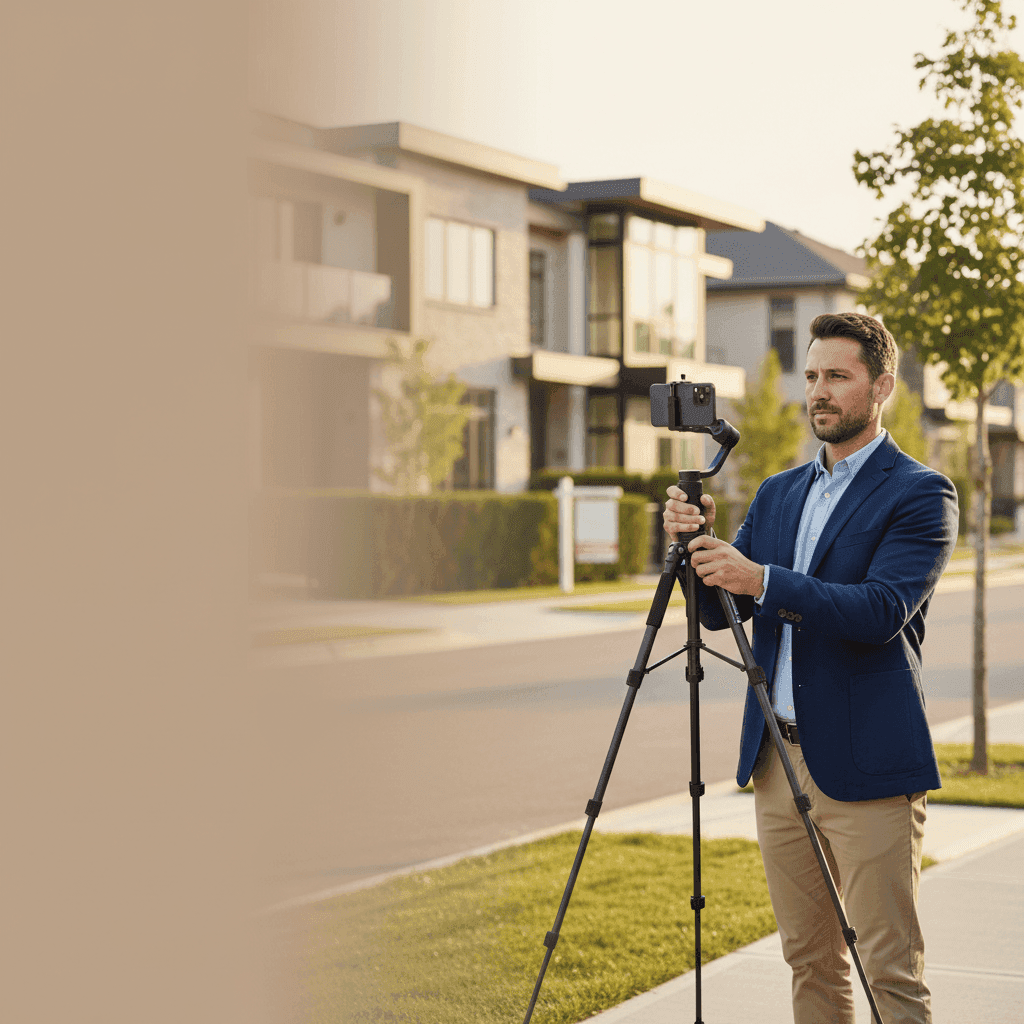
Create a simple gear checklist: phone with 4K capability, lavalier microphone, small LED light, and tripod. This basic setup produces professional-looking results without breaking your budget or requiring technical expertise.
On-Set Tips: Making Your Client Comfortable
Start with easy warm-up questions about their new home or neighborhood. Keep camera lenses clean and roll some B-roll footage before the formal sit-down interview. This helps clients get used to being on camera without pressure.
Ask questions about the client's emotions and challenges, like "How did this make you feel?" to draw out tension and specifics that resonate with viewers. These emotion-led prompts deepen stories beyond surface-level satisfaction.
Coach clients on pacing by encouraging shorter sentences and natural pauses. Smile and nod to show you're engaged, but avoid interrupting their flow. Your energy behind the camera directly affects their comfort level on camera.
Interview Prompt Bank
Use these four categories to structure compelling testimonials:
Problem: "What was the biggest challenge or concern before we started working together?"
Process: "What did we do differently that made the biggest impact on your experience?"
Outcome: "What are you enjoying now that the process is complete?"
Referral: "Who would you recommend me to and why?"
These prompts naturally create a story arc that prospects can relate to and follow easily.
Sources:
Editing Your Real Estate Testimonial Video
Structure That Converts
Start with a cold open using the strongest line or result from your interview. This might be "We got six offers in 48 hours" or "She saved us $15,000 in negotiations." Hook viewers immediately.
Follow this structure: Problem (10-15 seconds) where the client describes their initial challenge, Process (15-25 seconds) covering what you did differently, Outcome (10-20 seconds) showing numbers, relief, or lifestyle benefits, and a Callout (3-5 seconds) with on-screen text highlighting the key result.
Sound, Music, and Pacing
Prioritize clean dialogue over background music. If you add music, keep it subtle and under the voice track. Use simple cuts that don't distract from the story. Always include captions for silent autoplay on social platforms.
Test your edit on your phone with sound off to ensure captions carry the story effectively. Most social video plays silently at first, so visual storytelling through text becomes crucial.
The Role of B-Roll Footage
Incorporate B-roll footage that reinforces the client's story, such as home exteriors, neighborhood shots, paperwork signing, or keys handoff moments to add emotional impact. These cutaways give viewers visual context while supporting the narrative flow.
B-roll also covers awkward pauses or allows you to shorten responses without jarring jump cuts. Film extra footage of relevant locations and moments during your client interactions.
Deliverables and Ratios
Export in multiple formats: 9:16 for Reels, TikTok, and Shorts, 1:1 for Instagram feed posts, and 16:9 for YouTube and LinkedIn. Add burned-in captions that can't be turned off and include a brand end card with your contact information.
Create templates for consistent branding across all your testimonial videos. This builds recognition and professionalism over time.
Pair your testimonial with a sequence of listing shorts created in minutes from photos using Peachgum. Choose visual effects and soundtracks to keep your brand feel consistent across posts and export ready-to-post vertical formats.
Sources:
Your Path to More Powerful Client Stories
Creating compelling real estate testimonial videos comes down to timing, preparation, and authenticity. Ask clients at milestone moments when gratitude is fresh. Guide them with open-ended prompts that draw out specific problems you solved. Keep production clean but not perfect, and edit for story and emotion rather than polish.
A well-made real estate testimonial video builds trust faster than any other marketing content because it shows real results with real people. When prospects see someone like them sharing a positive outcome, it accelerates their decision-making process significantly.
How Long Should a Testimonial Be?
Keep testimonials 45-90 seconds for short-form platforms like Reels, TikTok, and Shorts. For YouTube or detailed case studies, 2-3 minutes allows for more story development without losing viewer attention.
What If a Client Is Camera-Shy?
Offer alternatives like audio-only testimonials over B-roll footage, or written quotes that you can read as voiceover. Some clients feel more comfortable with this approach while still providing authentic content.
Do I Need a Release?
Yes, always get simple media consent that covers social media platforms and usage duration. A basic form protects both you and your client and shows professionalism.
What Gear Do I Really Need?
A smartphone with 4K capability, lavalier microphone, small LED light, and tripod covers all your basic needs. This setup produces professional results without major investment.
Video testimonials convey emotion and build credibility beyond text reviews because viewers can see and hear authenticity. This emotional connection drives trust and referrals more effectively than written testimonials alone.
To keep your posting cadence strong between testimonial shoots, use Peachgum to turn listing photos into cinematic Shorts, Reels, and TikToks in minutes. No editing skills or videographer required.
Sources:
Start Building Your Testimonial Library This Week
Pick one past client from your last three closings. Send them the pre-ask email today. Book a 20-minute filming slot for this weekend. Use the interview prompt bank to guide their story, focusing on the specific problem you solved and the outcome they achieved.
Post your first real estate testimonial video this week, then build a repeatable monthly cadence. Each testimonial becomes a powerful asset you can repurpose across platforms, email campaigns, and listing presentations.
Your satisfied clients want to help you succeed. They just need you to make the ask and make it easy. Start today and watch how authentic client stories transform your marketing impact.
Sources: