Real Estate Photography Gear: Best Cameras and Lenses

Mastering Real Estate Photography Gear for Business Growth
If you're serious about listings that stop the scroll and win more appointments, your real estate photography gear matters. Every agent knows that blurry phone photos don't cut it anymore, but with cameras, lenses, and accessories ranging from hundreds to thousands of dollars, where do you actually invest your money?
In this practical, agent-to-agent guide, you'll learn how to choose the best camera for real estate, which lens for real estate photography delivers natural-looking interiors, what to put in a dependable real estate photography equipment setup, and how to maintain and upgrade your gear over time. You'll also pick up workflow tips that help you turn today's photos into tomorrow's marketing assets without adding hours to your day.
Understanding the Essentials of Real Estate Photography Gear
Why Professional Gear Matters Now
The numbers don't lie. Listings with high-quality photos sell 32% faster than those with amateur shots, making photography a direct lever for time-on-market and perceived value. This isn't just about pretty pictures. It's about positioning your listings as premium properties that command attention and faster offers.
Sources: NAR
Core Components of a Dependable RE Photography Kit
A solid real estate photography equipment setup doesn't require a studio's worth of gear. The essentials include a full-frame mirrorless or DSLR camera, a wide-angle lens, a sturdy tripod, and lighting equipment for interiors. Add memory cards, backup batteries, and basic cleaning tools, and you're ready for 90% of listing scenarios.
The key is choosing gear that works together as a system. Your camera and lens combination should capture rooms accurately without excessive distortion. Your tripod should be stable enough for sharp images but light enough to move quickly between rooms. Your lighting should balance natural window light with interior shadows.
Sources: PhotoUp
How Gear Choices Impact Your Brand and Pipeline
Consistent, accurate color reproduction and straight architectural lines build trust with potential buyers and listing prospects. When your photos look professional across every listing, sellers notice. They start recommending you specifically because your marketing materials stand out from agents using basic equipment.
Faster setup also means you can scale your listing volume without sacrificing quality. Professional gear that works reliably lets you shoot more properties per week while maintaining the high standards that win repeat business.
Transform your finished listing photos into cinematic short-form videos for Instagram, TikTok, and YouTube Shorts in minutes with Peachgum. No editing or videographer required. Instead of spending $500 to $1,500 on separate video shoots, repurpose your existing photos into engaging social content that reaches buyers where they spend their time.
Exploring the Best Camera for Real Estate
Features to Consider When Choosing a Camera
Sensor Size Makes the Difference
Full-frame sensors deliver wider fields of view, better low-light performance, and higher dynamic range. These advantages matter most in interior photography where you're balancing bright windows against darker room corners. The larger sensor captures more detail in both highlights and shadows without losing information you'll need during editing.
Sources: DPReview
Dynamic Range and Color Accuracy
Real estate interiors challenge cameras with mixed lighting conditions. Window light might be 5600K while indoor bulbs run 3000K. Your camera needs enough dynamic range to preserve detail in both bright windows and dark corners. RAW file support is essential for correcting these mixed color temperatures in post-processing.
Low-Light and ISO Performance
Clean files at ISO 1600 to 6400 minimize noise without overreliance on flash. Many professional camera bodies rate to ISO 102,400, but practical image quality typically peaks much lower. Focus on cameras that deliver usable results at ISO 3200, which covers most interior shooting situations.
Sources: PhotoUp
Resolution and File Flexibility
A range of 24 to 33 megapixels hits the sweet spot for detail capture and workflow speed. Higher resolution helps with cropping flexibility but increases file sizes and processing time. For most real estate applications, 24MP provides more than enough detail for web use and large prints.
Usability and Ecosystem
Reliable autofocus, intuitive menu systems, tethering options, and lens availability matter more than chasing specification numbers. Choose a system you'll actually want to use consistently rather than the camera with the most impressive tech sheet.
Top Camera Recommendations
Sony A7 IV
The Sony A7 IV delivers 33MP full-frame performance with excellent dynamic range and color accuracy. Its robust video feature set also works well if you shoot promotional reels or property tours. The camera is widely recommended by real estate photographers for its balance of image quality and usability.
Sources: InsideRealEstatePhotography
Canon EOS 5D Mark IV
Canon's 5D Mark IV offers 30.4MP full-frame capture with proven low-light performance across its ISO 100 to 102,400 range. This camera remains a staple for detailed interior and exterior shots, with an extensive lens ecosystem and reliable performance in varied conditions.
Sources: PhotoUp
How to Choose Between Them
Consider your current lens collection, budget constraints, and preference for mirrorless versus DSLR form factors. Both cameras deliver professional results, so factor in long-term lens investment and which system feels more comfortable during extended shooting sessions.
Not ready to upgrade your camera body yet? Maximize your current equipment's value by turning your still photos into polished vertical videos with Peachgum. Upload your photos, choose a visual effect and soundtrack, and post the finished clip in minutes.
Lens for Real Estate Photography: What Matters and Top Picks
What Makes a Good Lens for Real Estate Photography?
Focal Length for Interior Spaces
For full-frame camera bodies, 14mm to 16mm on the wide end keeps rooms looking spacious without heavy barrel distortion. A 24mm to 35mm range covers detail shots of architectural features, appliances, and exterior elements. This flexibility lets you capture both room flow and specific selling points.
Aperture Requirements
An f/4 maximum aperture is often sufficient for interior photography where you shoot on a tripod at higher f-stops for maximum sharpness. However, f/2.8 capability helps in particularly tight spaces or darker rooms where you need to maintain reasonable shutter speeds.
Distortion and Edge-to-Edge Sharpness
Prioritize lenses with minimal barrel distortion and good corner-to-corner sharpness. These optical qualities maintain straight architectural lines and keep room proportions looking natural. Heavy distortion correction in post-processing can introduce artifacts and reduce image quality.
Why Wide-Angle Coverage Matters
Wide-angle lenses capture more of each room in fewer frames, show the flow between connected spaces, and reduce time spent on site. This efficiency translates directly into your ability to handle more listings per day while maintaining consistent quality standards.
Leading Lens Options for Real Estate Photography
Sony 16-35mm f/2.8 GM II
For Sony full-frame systems, the 16-35mm f/2.8 GM II offers lighter weight construction with improved optical performance. This lens delivers excellent edge-to-edge sharpness and serves as an ideal interior photography workhorse for professional real estate applications.
Sources: InsideRealEstatePhotography
Budget-Friendly Alternatives
Consider 16-35mm f/4 versions for budget-conscious upgrades that still deliver professional results for tripod-based interior photography. Ultra-wide 14-24mm options work well for tight condominiums or small bathrooms, but verify the distortion profile works well with your editing software.
The specific lens choice depends on your camera system, but prioritize optical quality over maximum aperture for real estate applications where you'll typically shoot at f/8 to f/11 for optimal sharpness.
What to Put in Your RE Photography Kit: Tripods, Lighting, and Accessories
Importance of Tripods in Capturing Stable Shots
Why Tripods Are Non-Negotiable
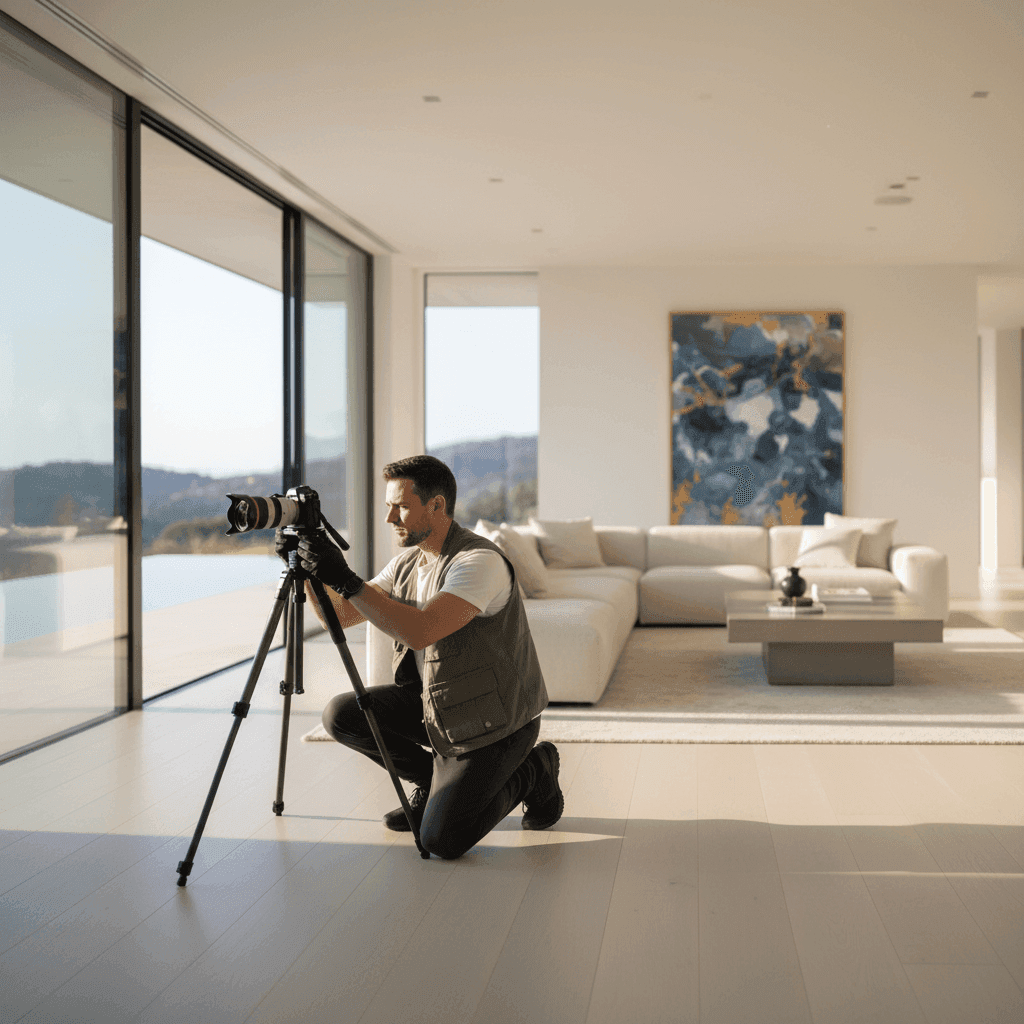
Tripods enable low ISO settings, higher f-stops for maximum sharpness, and consistent framing for HDR or exposure blending techniques. They eliminate camera shake that becomes visible in large prints and ensure your architectural lines stay straight and parallel.
Recommended Tripod Model
The Manfrotto MT055XPRO3 provides durability with a 90-degree center column feature that enables flexible shooting angles in tight spaces. This tripod strikes the right balance between stability and portability for real estate photography applications.
Sources: PhotoUp
Quick Setup Tips
Use a built-in bubble level for consistent horizons, lock the center column when possible for maximum stability, and establish a repeatable shooting height across your listings for consistent perspectives.
Role of Lighting Equipment in Creating Attractive Photos
When to Add Artificial Light
Supplement natural light to balance mixed color temperatures, lift shadows in deep rooms, and preserve window detail through flash-ambient exposure blending. Good lighting technique can save significant time in post-processing while delivering more natural-looking results.
Recommended Flash Equipment
The Yongnuo YN560 IV offers 24mm to 105mm zoom capability with quick 3-second recycle times for fast, wide-area interior coverage. This manual flash provides reliable performance at a fraction of the cost of brand-name alternatives.
Sources: PhotoUp
Supporting Lighting Accessories
Invest in lightweight stands, wireless triggers, and basic bounce modifiers. Simple bounce techniques using walls or ceilings often produce more natural-looking illumination than direct flash, and wireless triggers let you position lights exactly where needed.
After you export your final photos, use Peachgum to instantly package them into ready-to-post vertical videos for Instagram, TikTok, and YouTube Shorts. No editing skills required. Shoot once, then market everywhere across the platforms where your potential clients spend their time.
Must-Have Accessories to Speed Up Workflow
Essential Backup Items
Pack dual batteries with a charger, high-speed SD or CFexpress memory cards, lens cleaning cloths, gaffer tape, and a gray card for color reference. These small items prevent shoot delays and ensure consistent results across different properties.
Practical Tools for Smooth Operations
Include doorstops to hold doors at optimal angles, a small toolkit for minor adjustments, and silica gel packs to control moisture in your camera bag. These details separate professional shoots from amateur efforts and demonstrate attention to detail that clients notice.
Maintaining and Upgrading Your Real Estate Photography Equipment
Maintenance for Longevity and Consistency
Routine Care Practices
Clean lenses and sensors regularly to prevent dust spots that require post-processing removal. Check tripod locks and joints for wear that could affect stability. Test flash units periodically to verify consistent power output and color temperature.
Keep silica gel packets in your camera bag to reduce moisture buildup, especially when moving between air-conditioned interiors and humid exteriors during summer shooting sessions.
Data Protection Discipline
Implement redundant backup systems with both onsite storage and cloud synchronization to protect client assets. Develop consistent file naming conventions that speed delivery and make it easy to locate specific images months later for marketing purposes.
Sources: PhotoUp
Smart Upgrade Path for Maximum ROI
When to Consider Upgrades
Upgrade when you're consistently pushing ISO settings beyond your camera's clean performance limits, struggling with dynamic range in challenging lighting, or when your current lens can't maintain edge-to-edge sharpness at the apertures you need.
Investment Priority Order
Start with glass (your wide-angle lens), then upgrade the camera body, then expand lighting capabilities. This sequence optimizes for the components that most directly affect interior image quality and client perception.
Budget Strategy That Works
Apply the "buy once, cry once" principle to your primary wide-angle lens since this affects every interior shot. Consider renting specialty items before purchasing to verify they solve specific problems in your workflow.
As you upgrade your still photography capabilities, amplify your marketing reach by converting every photo set into short-form video content with Peachgum. This approach provides a faster, more cost-effective alternative to hiring videographers for each listing while maximizing your gear investment.
Common Real Estate Photography Gear Questions Answered
Understanding the ROI of Equipment Upgrades
Quality photography gear directly impacts your ability to create listings that sell faster and command higher prices. The 32% reduction in time-on-market from professional photos translates to happier sellers, more referrals, and stronger listing presentations when competing against other agents.
Sources: NAR
Full-Frame vs. Crop Sensor Considerations
Full-frame cameras provide wider viewing angles and superior low-light performance that matter most in interior photography. Crop sensor cameras can work effectively with the right wide-angle lenses and proper technique, but full-frame systems offer more flexibility in challenging lighting conditions.
Sources: DPReview
Budget-Friendly Camera Options
Consider previous-generation full-frame camera bodies or high-end crop sensor models when budget is a primary concern. However, prioritize investing in a solid wide-angle lens over the latest camera body, as lens quality affects every image you capture.
Sources: PhotoUp
Achieving Natural-Looking Interior Shots
A 16-35mm lens on full-frame cameras keeps interior spaces looking realistic with minimal distortion that requires correction. This focal range captures room flow naturally while avoiding the funhouse effect that ultra-wide lenses can create.
Sources: InsideRealEstatePhotography
Tripod Necessity for HDR Photography
Tripods are essential for HDR and exposure bracketing techniques since they minimize alignment errors between exposures and enable low ISO settings for cleaner image files. Handheld HDR rarely produces professional-quality results suitable for listing marketing.
Sources: PhotoUp
Starting Point for Interior Lighting
Begin with one or two manual speedlights like the YN560 IV, plus basic stands and wireless triggers. This setup handles most interior lighting challenges while keeping investment reasonable as you develop your lighting technique and style preferences.
Sources: PhotoUp
Building Your Photography Investment Strategy
Master the fundamentals of camera selection, lens choice, tripod stability, and interior lighting, and you'll see immediate improvements in shooting speed, image consistency, and how your brand appears online. With the right real estate photography gear and a clear upgrade path, you can create market-ready images that reduce days on market and help you win more listing appointments.
Then stretch each photo set even further by transforming your still images into engaging vertical video content for the social media platforms where your potential clients spend their time browsing properties and researching agents.
Try turning your latest listing photos into a cinematic short-form video in minutes with Peachgum. Pick a visual effect and soundtrack, then post to Instagram, TikTok, or YouTube Shorts today to see how professional photography combined with smart marketing amplifies your reach and builds your real estate business.