Real Estate Social Media Video Marketing Strategy Guide

Effective Strategies for Real Estate Social Media Video Marketing
You're competing with thousands of posts every single day. While most agents post the same staged photos and generic market updates, the agents actually winning listings and referrals are the ones who've mastered real estate social media video marketing, especially short-form content that stops the scroll.
The problem isn't that agents don't know video matters. Most understand that video gets better reach and engagement. The real challenge is knowing what to film, how to script it, which platforms to prioritize, how often to post, and most importantly, how to measure what's actually working without getting overwhelmed by the production process.
This practical playbook breaks down exactly what successful agents are filming, where they're posting it, how they're maintaining consistency, and which metrics actually predict more leads. Plus, we'll cover both DIY approaches and modern tools that can produce polished videos in minutes when you don't have time for a full shoot.
Understanding the Power of Social Media Video for Realtors
Why Realtors Should Embrace Video Marketing?
Social media platforms prioritize video content in their algorithms, which means your video posts get significantly more reach and visibility compared to static photos or text updates. This algorithmic boost isn't just a nice bonus, it's become essential for staying competitive in local markets where buyers and sellers spend most of their time scrolling.
Video tours provide immersive experiences that boost engagement over traditional listing photos. Instead of trying to imagine walking through a space, potential buyers can actually see the flow between rooms, get a sense of natural light throughout the day, and notice details that static images miss entirely.
The business impact translates directly to outcomes agents care about: higher engagement rates mean more profile visits, stronger brand recall leads to more referrals, and video content generates significantly more inquiries than photo-only posts.
Types of Social Media Video for Realtors
Short-form content works best for quick wins: 15 to 60-second property highlights, rapid-fire tips, staging transformations, and local market snapshots like "3 homes under $500k in downtown Springfield." These bite-sized videos perform exceptionally well because they deliver immediate value without requiring a time commitment from viewers.
Long-form content builds deeper relationships: full property tours, neighborhood walk-throughs, detailed buyer and seller guidance, and monthly market updates. YouTube particularly rewards this type of content, and agents who consistently post 6 to 12-minute tours often rank in local search results.
Community and trust-building videos separate top performers from the pack: behind-the-scenes content showing your actual work process, client testimonials captured right after closing, local business spotlights, and market predictions. These videos work because they show your personality and expertise rather than just your listings.
When discussing short-form highlights and reels, Peachgum offers a practical solution for turning listing photos into cinematic reels in minutes, which is especially valuable when you don't have fresh video footage but need consistent posting.
Sources: Sprout Social, Backlinko, Later
Creating Your Realtor Video Marketing Guide
Equipment and Tools Needed for Video Creation
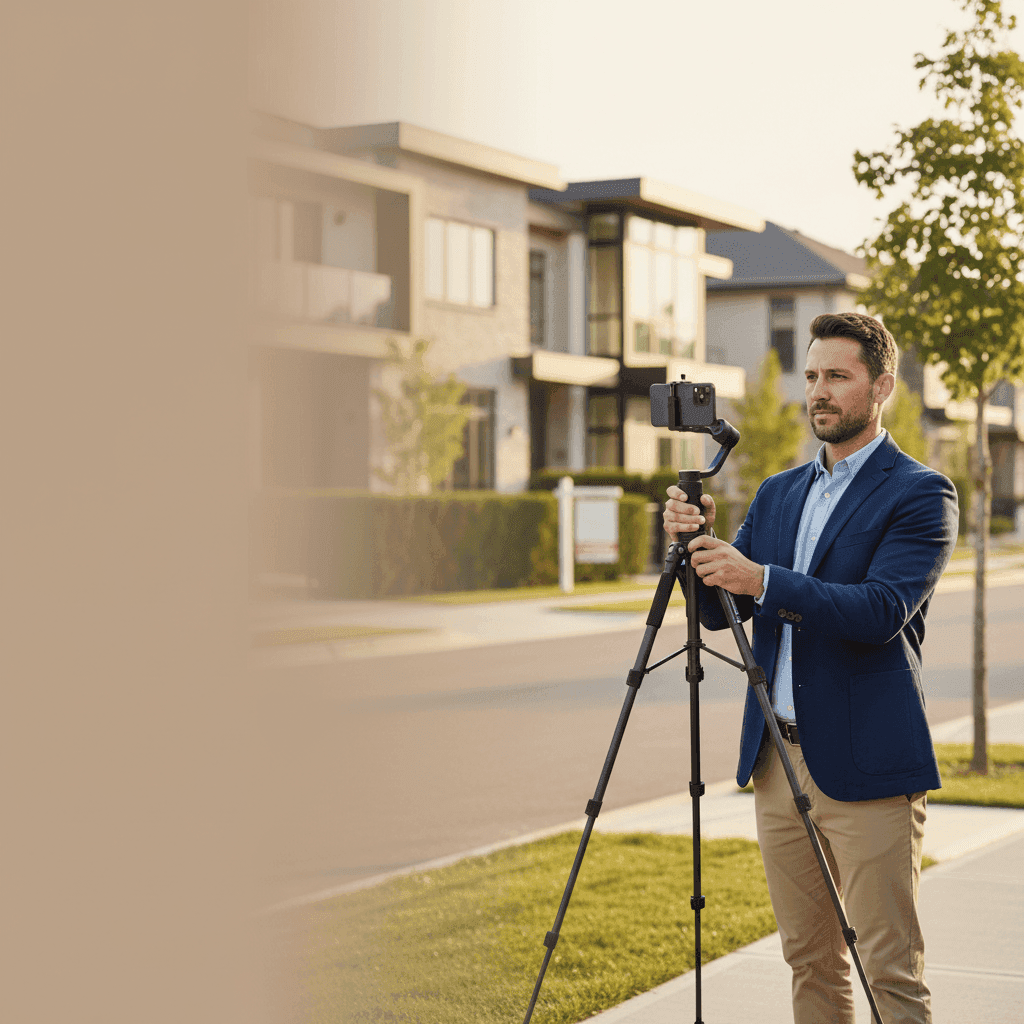
Start with essential gear that delivers professional results without breaking your budget: a smartphone with a quality camera, a clip-on lavalier microphone for clear audio, a small LED light for consistent lighting, and a tripod or gimbal for stable shots. These four items handle 90% of your video needs.
Optional upgrades make sense once you're posting consistently: drones for aerial property shots, 360-degree cameras for immersive virtual tours, and wireless microphone systems for outdoor filming. However, clear audio and stable framing should be your first priorities since viewers forgive mediocre video quality but abandon content with poor sound.
For editing, start with native in-app editors on Instagram and TikTok, then graduate to CapCut or VN for more control. Desktop options like DaVinci Resolve offer professional features for free, but mobile editing keeps you posting consistently rather than getting stuck in post-production perfectionism.
For non-shoot days or when you only have listing photos available, Peachgum generates ready-to-post short-form videos with visual effects and soundtracks, requiring no editing skills while maintaining a professional look.
Sources: HubSpot, Consumer Reports, Adobe
Scripting and Storytelling in Videos
The hook framework that consistently works: create a pattern interrupt in the first three seconds, promise a specific outcome, then deliver on that promise with a clear call-to-action. For example: "Stop scrolling if you're tired of tiny kitchens" (interrupt), "This $400k home has the biggest kitchen island you've ever seen" (promise), then show the kitchen while explaining the CTA.
Structure listing videos using proven story beats: identify the buyer's problem or desire, promise a unique solution or feature, provide proof through 3 to 5 compelling visuals, then close with a specific next step like "DM me for a private showing this weekend."
On-camera presentation tips that actually matter: talk directly to one person rather than a general audience, keep individual segments short with tight cuts every 8 to 12 seconds, and always add captions since most social media videos are watched without sound, especially during work hours.
Sources: Wistia, Meta for Business
Implementing Your Real Estate Video Social Strategy
Selecting the Appropriate Social Media Platforms
Instagram excels for polished listing content: Reels work perfectly for property teasers and room highlights, while carousel posts showcase before-and-after renovations. Use geo-tags and local hashtags like #SpringfieldHomes or #DowntownLiving to help local buyers discover your content.
TikTok rewards authentic, quick-moving content: brief property tours, trending audio with real estate twists, and local area highlights perform well. The platform favors consistent posting and genuine personality over polished production, making it ideal for agents comfortable being themselves on camera.
YouTube serves two purposes: long-form neighborhood guides and property tours rank well in Google search results for local real estate queries, while YouTube Shorts repurpose your TikTok and Instagram content for additional discovery without extra work.
Facebook still reaches local audiences effectively: live walk-throughs generate immediate engagement and questions, while longer market insight videos perform well with older demographics who make up a significant portion of home sellers.
Match your content length and tone to each platform's expectations, and always include hyper-local keywords in captions to improve search visibility within each platform.
Peachgum exports videos optimized for Instagram, TikTok, and YouTube Shorts dimensions, which simplifies cross-posting without manually reformatting content.
Sources: Instagram Creators, TikTok Business, YouTube Creators, Pew Research, Backlinko
Strategies for Video Posting and Engagement
Post 3 to 5 short-form videos per week per platform to train each algorithm to show your content more frequently. Batch recording and scheduling prevents the daily scramble for content while maintaining the consistent presence that social media algorithms reward.
Timing matters less than consistency, but testing your local audience's peak activity periods helps optimize reach. Most successful agents focus on posting at the same times each week rather than chasing the perfect universal posting schedule.
Engagement tactics that generate real responses: ask specific questions rather than generic ones like "thoughts?", add clear on-screen calls-to-action during the video, pin your most important comments to the top, and respond quickly to comments and direct messages. Adding CTAs directly in your videos can increase clicks by up to 380% compared to relying only on captions or bio links.
Improve accessibility and retention by including captions on every video, using large, readable text for key points, and adding on-screen chapter markers for longer content. These elements help viewers follow along whether they're watching with sound on or off.
Sources: Later, Sprout Social, Wyzowl, Meta for Business
Measuring Success in Your Social Media Video Efforts
Track metrics that connect to business outcomes: total views show reach, but 3-second and 50% retention rates indicate whether your content actually holds attention. Engagement rate, profile visits, and link clicks reveal if viewers take action after watching.
Monitor saves and shares as leading indicators of content quality, since these actions suggest viewers found your video valuable enough to reference later or recommend to others. Track conversion metrics like appointment bookings, lead form completions, and direct message inquiries to connect social media activity to actual business results.
Use a funnel approach to understand your content's role: top-of-funnel reach through Reels and Shorts introduces you to new potential clients, mid-funnel interest through longer YouTube tours builds trust and expertise, and bottom-of-funnel conversion happens through direct messages and profile link clicks.
Create an iteration loop by keeping content that maintains high retention rates, replacing videos that lose viewers in the first 1 to 3 seconds, and A/B testing different hooks, captions, and calls-to-action to continuously improve performance.
Sources: Hootsuite, Think with Google, YouTube Creators
Real Estate Social Media Video Marketing: Production Workflows That Scale
A Weekly Agent Social Media Video Plan
Dedicate one day per week to content creation: capture general b-roll footage around your market area, record voiceovers for multiple videos, film community and neighborhood clips, and script 5 different hooks in advance. This batch approach prevents daily content stress while ensuring consistent posting.
Develop reusable templates that only require swapping details: "Just Listed in 30 Seconds," "Neighborhood Spotlight in 60 Seconds," "Offer Accepted Success Story," "3 Common Buyer Myths Debunked," and "Open House Preview." These frameworks speed up both planning and production while maintaining variety for your audience.
Sources: Buffer
Repurposing Across Platforms Without Looking Repetitive
Create platform-specific variants from the same source material: change the opening hook, update captions for each platform's audience, swap background music to match platform preferences, and adjust aspect ratios for optimal viewing. This approach maximizes your content investment while respecting each platform's unique culture.
Remove watermarks and use native uploads whenever possible, since platforms often limit the reach of content that appears to be cross-posted from competitors. Taking an extra minute to upload directly rather than sharing from another app typically results in better performance.
Peachgum creates multiple cinematic versions from the same photo set with different visual effects and soundtracks, making platform-specific repurposing fast and professional-looking.
Sources: YouTube Creators, TikTok Business, Later
Team Roles and Light Outsourcing
Divide responsibilities efficiently: the agent appears on camera and provides market expertise, an assistant or team member handles scheduling posts, writes captions, and manages comment responses, while occasional contractors provide specialized services like drone footage for luxury listings.
Compare costs realistically: hiring a videographer for each shoot typically costs $500 to $1,500 or more, while DIY production combined with smart automation tools can maintain daily posting at a fraction of that cost. The key is finding the right balance for your market and budget.
Peachgum serves as your day-to-day video creation engine for listings and teasers when hiring a professional videographer isn't practical or cost-effective for every property.
Sources: Upwork Marketplace
The Future of Agent Social Media Video Plan
Emerging Trends and Future Predictions
Short-form video dominance continues expanding across all platforms, with authentic, creator-style vertical content consistently outperforming polished, TV-commercial-style productions. Buyers and sellers increasingly prefer real, unscripted moments over heavily produced marketing videos.
AI-assisted creation tools are rapidly reducing production friction: automated voiceover generation, smart caption creation, and intelligent template systems help agents maintain consistent posting without spending hours in post-production. These tools level the playing field for agents who can't afford full-time video teams.
Interactive features create new engagement opportunities: polls and Q&A stickers let viewers participate in your content, live shopping features work well for new construction showcases, and real-time Q&A sessions during virtual tours build immediate connections with potential clients.
Local SEO increasingly favors video content: search engines display video snippets in local results, map listings with embedded video content rank higher, and YouTube videos often appear in Google search results for neighborhood and market queries.
Sources: HubSpot, McKinsey, Instagram Creators, Google Search Central
Your Next Video Marketing Action Plan
The complete social media video for realtors system comes down to consistency and iteration over perfection. Focus on the formats that match your platforms: short-form highlights for discovery, longer tours for trust-building, and community content for relationship development. Establish a posting cadence you can maintain, measure what actually drives business results, and refine your approach based on data rather than assumptions.
Start your next week's content with three short-form listing teasers and one neighborhood guide. If you've only got photos available but need to maintain your posting schedule, turn them into cinematic clips in minutes with Peachgum and keep your social media presence active while you plan your next video shoot.