Virtual Staging vs Traditional Staging: Cost, Speed, ROI

Weighing Your Home Sale Options: Virtual Staging vs Traditional Staging
Staging can make or break a first impression, but should you invest thousands in furniture and movers or go digital? Every listing decision impacts your timeline, budget, and buyer appeal.
The choice between virtual staging vs traditional staging affects everything from your time-to-market to final sale price. One route gets you live faster and cheaper. The other creates powerful in-person experiences that close deals.
In this guide, you'll discover clear definitions of both approaches, detailed cost and speed comparisons, buyer impact data, and a practical framework to choose the right option for each listing. Plus, you'll learn how to maximize your staged photos across MLS and social media for maximum reach.
Understanding Home Staging
What is Traditional Staging?
Traditional staging involves a full-service process: consultation, rental furniture selection, decor coordination, delivery, professional installation, insurance coverage, monthly renewal fees, and eventual de-staging when the home sells.
The benefits are powerful. Traditional staging creates immediate emotional resonance during in-person showings. Buyers can touch, sit, and move through furnished spaces. Scale and flow become instantly clear when walking room to room.
The drawbacks include higher upfront costs, complex logistics, potential delays from scheduling conflicts, risk of furniture damage, and recurring monthly fees that add up during longer listing periods.
Research shows traditional staging excels at reinforcing positive impressions during in-person tours and helps buyers accurately gauge room scale and layout flow.
Sources:
Unfolding the Concept of Virtual Staging
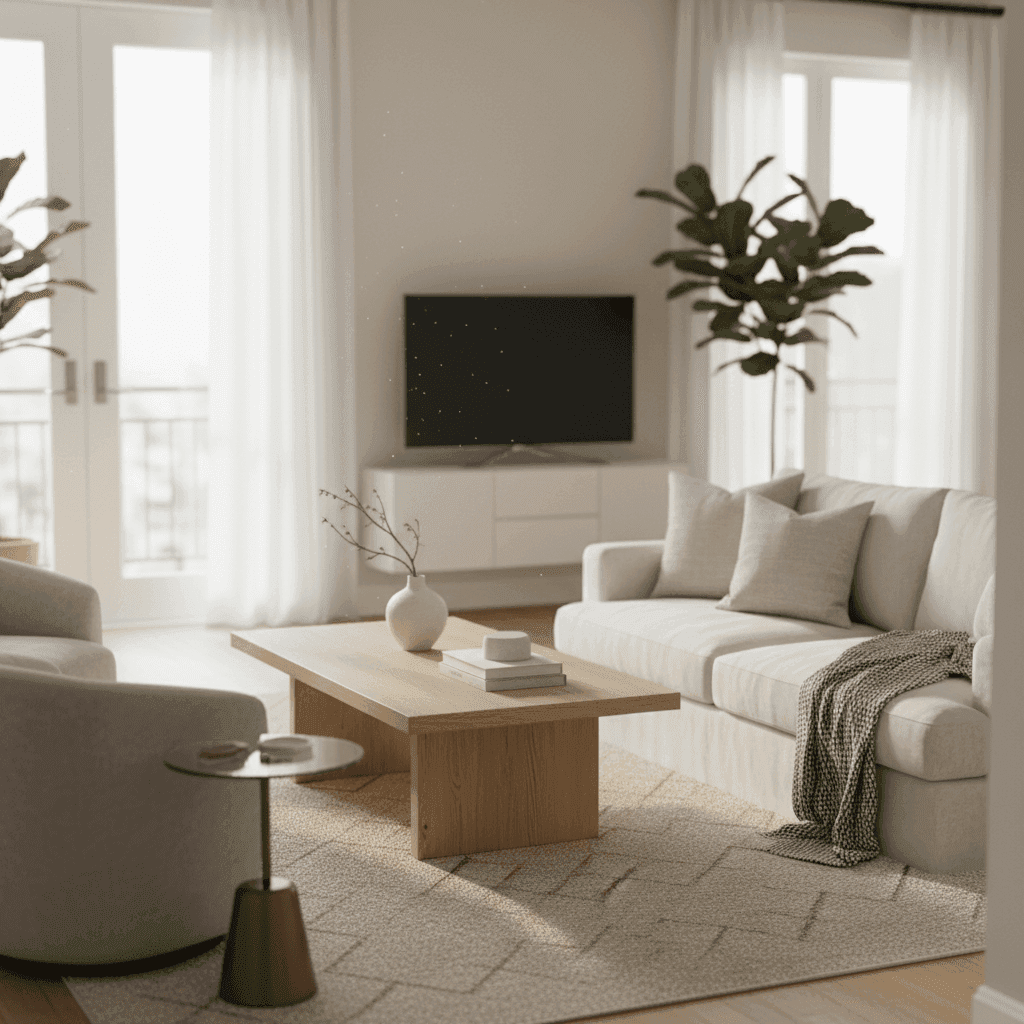
Virtual staging starts with professional photos of vacant or partially furnished rooms. Digital designers then add realistic furniture, decor, lighting, and styling elements using specialized software to create finished images.
The benefits include rapid turnaround times, flexibility to test multiple design styles, low per-image costs, and the ability to customize decor for different buyer personas without physical constraints.
Potential drawbacks center on buyer disconnect during showings if the home appears empty after seeing furnished photos online. Proper disclosure on MLS listings and marketing materials becomes critical to manage expectations.
Virtual staging performs exceptionally well for online marketing but requires careful management to prevent disappointment during in-person visits if not handled properly. Clear disclosure practices help maintain trust throughout the buyer journey.
Sources:
Why is Staging Important in Real Estate?
Staging transforms how buyers perceive and connect with properties. It helps them visualize room functionality, lifestyle possibilities, and spatial relationships while increasing engagement on listing portals and social media.
The modern buyer journey flows from online discovery to in-person experience. Compelling staged images generate the initial click and interest. The in-person showing experience then closes the emotional connection that leads to offers.
Traditional staging strengthens in-person impressions and buyer confidence during showings. Virtual staging boosts online appeal and click-through rates while enabling broader reach across digital marketing channels.
Both approaches serve the same core goal: helping buyers see themselves living in the space while maximizing the property's visual appeal during critical decision moments.
Sources:
Comparing Traditional and Virtual Staging
Cost Comparison: Virtual Staging Cost vs Traditional Staging Cost
Virtual staging typically costs $29 to $39 per photo, with some providers charging $50 to $150 per image depending on complexity and quality level. For a complete listing package of 10-15 staged images, expect to invest $300 to $600 total.
Traditional staging averages around $6,000 nationally but can reach $25,000 or more for luxury properties or extended listing periods. Even basic traditional staging packages typically start at $2,000 minimum for essential rooms only.
From an ROI perspective, virtual staging allows more budget allocation toward professional photography, video content, and digital advertising. The cost savings often exceed 80-90% compared to traditional staging while covering more rooms and style options.
The key question becomes: is virtual staging worth it for your specific listing? Map your expected cost per lead and price uplift against your property's price bracket and local competition to determine the optimal investment level.
Sources:
Efficiency Comparison: Traditional Staging vs Digital
Virtual staging delivers finished images in 24 to 48 hours after receiving source photos. This rapid turnaround enables same-week listings for time-sensitive situations like relocations, new construction, or market timing strategies.
Traditional staging typically requires 3 to 7 days for setup, with some situations extending to 7 to 14 days when including initial consultation, furniture procurement, delivery scheduling, and professional installation coordination.
This timeline difference directly impacts your time-to-market advantage. Faster listings capture buyer attention during peak search periods and reduce carrying costs for vacant properties. Traditional staging may delay your launch but potentially strengthens conversion during showings.
The efficiency gap becomes critical for new builds, estate sales, rehabs, and any situation where speed to market affects competitive positioning or holding costs.
Sources:
Impact on Buyers: Traditional Staging vs Virtual Staging
Online behavior shows virtually staged images increase click rates, save rates, and social media engagement. Virtual staging enables A/B testing of multiple design styles (modern, farmhouse, luxury) to identify which resonates most with your target buyer demographic.
In-person behavior reveals traditional staging's strength in cementing emotional connections and eliminating scale confusion. Buyers can physically experience room flow, furniture placement, and spatial relationships that photos cannot fully convey.
Risk management requires disclosing virtually staged images clearly and including unaltered photos to prevent disappointment during showings. Setting proper expectations protects both agent credibility and buyer satisfaction throughout the transaction.
Traditional staging creates strong emotional connections and helps buyers understand room scale during in-person showings, while virtual staging excels in online marketing but can cause disconnect if homes appear empty during visits.
Sources:
Choosing the Right Option: Virtual Staging vs Traditional Staging
Use virtual staging for vacant condos, builder spec homes, tight timelines, and budget-sensitive sellers who need speed and cost efficiency. Virtual staging works best when you can test multiple design styles and need rapid time-to-market positioning.
Choose traditional staging for luxury listings, properties with unusual floor plans, and homes that feel cold or confusing when empty. Traditional staging maximizes in-person conversion rates and works best when buyers need to experience spatial relationships physically.
Consider hybrid approaches: virtually stage for online marketing reach, then add selective physical pieces like rugs, lamps, and artwork for showing enhancement. This balances cost control with in-person appeal.
Your decision checklist should include budget caps, days-to-market targets, expected buyer pool demographics, anticipated showing frequency, current occupancy status, and local MLS disclosure requirements.
After you choose a staging route, use Peachgum to transform your staged photos (virtual or traditional) into cinematic, ready-to-post Reels, TikToks, and YouTube Shorts in minutes without requiring a videographer.
Sources:
Cost, Time, and ROI: A Quick Framework
Budget Tiers and What They Buy
Under $500 gets you 10+ virtually staged images plus social video repurposing for comprehensive online marketing coverage across all major platforms and listing portals.
$2,000 to $6,000 covers basic traditional staging for key rooms like living areas, primary bedrooms, and kitchens while leaving budget for professional photography and marketing.
$10,000+ enables whole-home traditional staging in competitive luxury markets where in-person presentation directly impacts final sale prices and negotiation leverage.
These cost ranges help determine which approach aligns with your listing's price point, competition level, and expected return on staging investment.
Sources:
Time-to-Market Tradeoffs
Launch this week versus next week: virtual staging's 24 to 48-hour turnaround enables immediate market entry for time-sensitive opportunities like price reductions, seasonal timing, or competitive response.
Holding costs and momentum considerations include daily carrying costs, market timing, and buyer attention cycles. Quick launches capture peak search periods while staging delays may miss optimal windows.
Balance preparation time against market momentum. Sometimes launching with virtual staging beats waiting for traditional setup, especially in fast-moving markets or declining inventory periods.
Sources:
Estimating Payoff
Use comparable sales data to estimate typical view-to-showing and showing-to-offer conversion rates in your market. Assign realistic lift percentages from stronger visual presentation and sanity-check against monthly carrying costs.
Consider the home staging comparison across both approaches: virtual staging typically increases online engagement 2-3x while traditional staging may improve showing-to-offer rates by 15-25% in the right situations.
Track your results over multiple listings to refine your staging ROI calculations and optimize future investment decisions based on actual performance data rather than industry averages.
Pair virtually staged photos with short-form video content built in Peachgum to amplify reach on Instagram, TikTok, and YouTube Shorts, delivering faster and cheaper results than hiring a $500 to $1,500+ videographer for each listing.
Workflow: From Photos to High-Impact Marketing
Capture
Shoot vacant rooms with proper angles, consistent lighting, and high resolution to support realistic virtual staging applications. For traditional staging, photograph after professional setup and styling completion.
Focus on hero shots that showcase room flow, natural light, and key architectural features. These foundation images determine the quality of your final staged presentation regardless of method chosen.
Maintain consistent camera height, white balance, and composition across all rooms to ensure cohesive visual storytelling throughout your listing presentation.
Stage
Virtual staging process: send selected photos for 1-2 style options that match your target buyer demographic. Confirm decor choices align with local preferences and receive finished images in 24 to 48 hours for immediate use.
Traditional staging process: coordinate delivery scheduling and professional installation. Focus on priority rooms including living areas, primary bedrooms, kitchens, and flexible spaces that buyers struggle to visualize.
Quality control both approaches by reviewing scale accuracy, lighting consistency, and style coherence before publishing across marketing channels.
Sources:
Publish
MLS requirements: disclose virtual staging clearly per local regulations and include at least one unaltered photo for transparency. Follow your association's specific disclosure language to maintain compliance.
Portal optimization: lead with your most compelling staged image and use descriptive captions that highlight style elements for search algorithm optimization and buyer appeal.
Social media sequencing: arrange images to tell a story flowing from entry to living areas to kitchens to primary bedrooms to outdoor spaces for maximum engagement.
Use Peachgum to instantly convert your staged photo collection into cinematic vertical videos with professional effects and soundtracks, exported in platform-native formats for Reels, TikTok, and YouTube Shorts.
The platform requires no editing skills, allowing agents to upload photos and receive finished videos in minutes, perfect for fast launches and price-change marketing refreshes.
Sources:
Case Snapshot: Virtual Staging vs Traditional Staging in Practice
Property A represents a vacant condo scenario: 8 virtually staged photos at $40 each totaling $320, with 48-hour turnaround enabling same-week listing launch. The agent created social video content that drove 3 qualified open house registrations within the first weekend.
Property B shows a detached home with awkward layout: $4,500 traditional staging investment for main rooms, requiring 7-day setup period but delivering stronger in-person conversion during the first weekend of showings.
Both approaches succeeded within their contexts. The condo prioritized speed and cost efficiency for a price-sensitive seller. The detached home needed in-person impact to overcome layout challenges that photos couldn't fully address.
The key insight: match your staging method to property characteristics, market timing, and buyer expectations rather than defaulting to one approach for every situation.
Sources:
Common Staging Questions Answered
Is virtual staging worth it for most listings? For vacant homes operating on budget constraints or quick timelines, virtual staging often delivers strong returns through major cost and speed advantages while enabling broader style testing options.
Does virtual staging mislead buyers? Not when clearly disclosed and used to illustrate room potential rather than misrepresent reality. Include unaltered photos and note material differences to maintain transparency throughout the buyer journey.
Can agents handle virtual staging independently? DIY tools exist with varying quality levels. For MLS-grade realism and professional results, work with established providers and review samples for accurate scale, shadow placement, and reflection details.
Should you combine both traditional staging vs digital approaches? Hybrid strategies can work effectively: use virtual staging for online marketing reach, then add selective physical pieces for showing enhancement, especially in spaces that are difficult to visualize when empty.
How many virtually staged photos optimize listing performance? Prioritize hero rooms including living areas, kitchens, primary bedrooms, and outdoor spaces. Most effective listings use 6 to 12 staged images covering key buyer decision points.
What about tight timeline constraints? Virtual staging typically returns finished images in 24 to 48 hours compared to traditional staging setup requiring 3 to 7+ days, making it ideal for time-sensitive market situations.
Sources:
Maximize Your Staging Investment with Video Marketing
Virtual staging vs traditional staging represents a fundamental tradeoff between speed and cost versus in-person emotional impact. The winning approach matches your method to property characteristics, timeline requirements, budget constraints, and buyer expectations.
Start by assessing your specific situation: vacant or occupied, budget parameters, days-to-market targets, and expected showing frequency. Choose virtual for speed and cost efficiency, traditional for in-person conversion, or hybrid for balanced coverage.
Once staged, maximize your investment distribution across MLS, listing portals, and social media platforms to capture demand at every touchpoint in the modern buyer journey.
Ready to amplify your staged photos with scroll-stopping social video content? Create your first Reel, TikTok, or YouTube Short with Peachgum in minutes without editing skills or videographer costs. Transform any staged photo collection into cinematic vertical videos that drive engagement and generate leads faster and cheaper than hiring a videographer for $500 to $1,500+ per shoot.
Share this staging guide with your team and bookmark it for your next listing presentation to make confident staging decisions that maximize both timeline and ROI for every property.