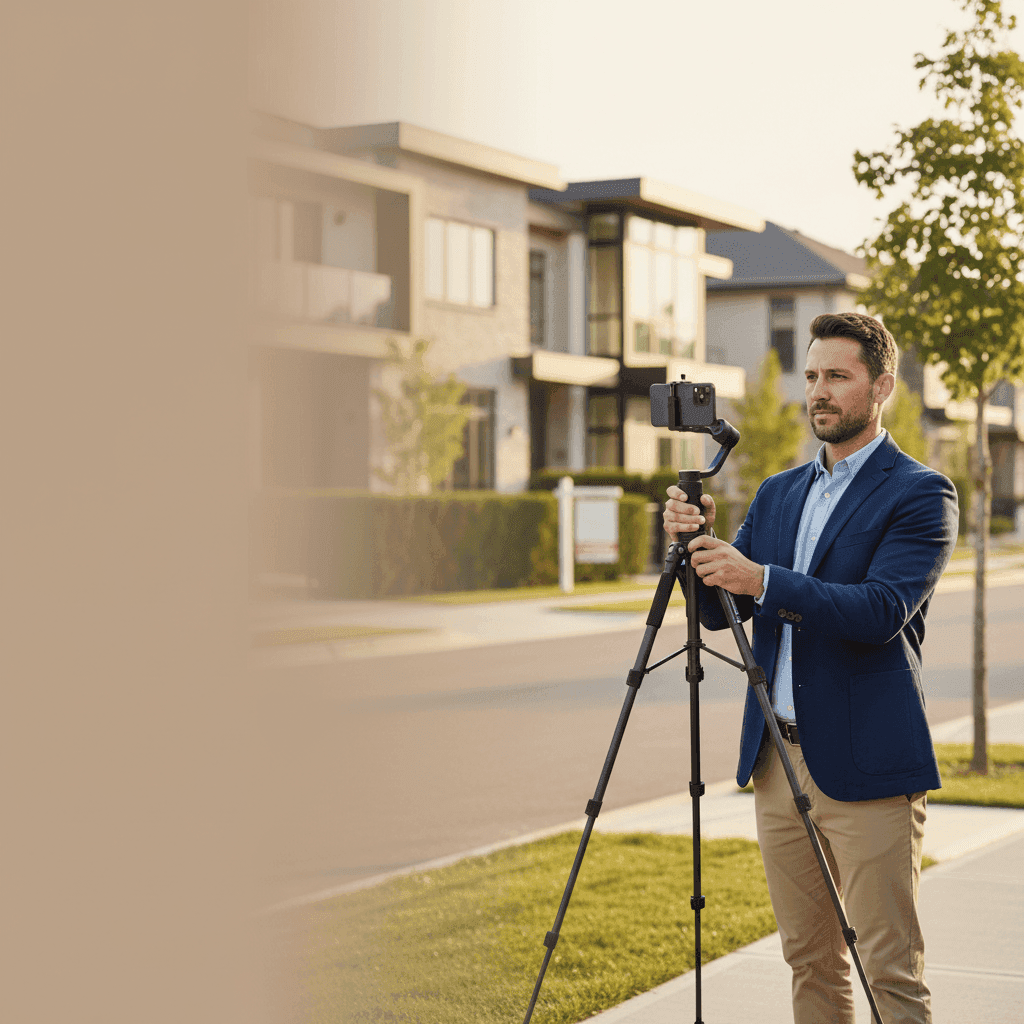
Local Expert Real Estate Video That Builds Authority


Local Expert Real Estate Video: Build a Stand-Out Hyperlocal Brand (Agent Guide)
In a world of algorithm-driven feeds and national portals, local wins. Clients don't hire "a realtor," they hire the agent who owns the block-by-block story. They want someone who knows why Oak Street listings sell faster than Pine Street, or which school boundary changes will affect home values next year.
Many agents know their market inside and out. You probably track listings, follow local trends, and understand your neighborhoods better than anyone. But here's the problem: knowing your market and packaging that expertise into content that consistently reaches prospects are two completely different skills.
This guide shows you how to combine hyperlocal real estate branding, personal brand strategy, and local expert real estate video to become the go-to agent in your neighborhood. You'll learn exactly how to transform your local knowledge into a content system that builds authority, generates inbound leads, and wins more listings.
Here's what you'll master:
- What hyperlocal branding is and why it gives you a competitive edge
- How to research and position yourself as a neighborhood authority agent
- How to define and amplify your personal brand in your target market
- A practical system for creating effective local expert real estate video content
- A repeatable 90-day plan to merge expertise, brand, and video for compounding results
What Is Hyperlocal Real Estate Branding?
Hyperlocal real estate branding means going beyond citywide content to focus on specific neighborhoods, school zones, blocks, and micro-trends. Instead of being another agent who covers "the greater metro area," you become the definitive expert on a smaller, more winnable territory.
Think of it this way: would you rather compete with 500 agents for generic "home buyer" searches, or dominate as the acknowledged expert for Riverside Elementary families looking to upgrade within the district?
Hyperlocal branding delivers three key advantages:
- Higher authority and recall: In a smaller market segment, it's easier to become the obvious choice. When someone thinks "Maplewood homes," your name comes to mind first.
- Easier content creation: Instead of generic market updates, you have consistent local storylines. New restaurant opening? That's content. School boundary change? That's content. Street construction project? That's content.
- Better search and social visibility: Neighborhood keywords and location hashtags face less competition than broad real estate terms.
The key is relevance. Buyers and sellers want the agent who anticipates local shifts, not someone who regurgitates generic market trends they could find anywhere online.
Becoming a Neighborhood Authority Agent
Owning a defined territory requires more than claiming it. You need research depth and consistent thought leadership that proves you understand what's happening and what's coming next.
Understanding Your Local Market
Real neighborhood expertise starts with tracking the right data points on a consistent schedule. Here's what to monitor weekly:
Market Metrics:
- New listings, pending sales, and closed transactions
- Days on market trends by price range and property type
- Price per square foot changes across different streets or subdivisions
Development Intelligence:
- School changes, boundary updates, or new programs
- Infrastructure projects, road construction, or public transit updates
- New business openings, closures, or major commercial developments
- Building permits, zoning requests, and development proposals
Where do you find this intel? Start with these two proven sources:
Attending local government meetings gives you future-facing insights into zoning changes and development projects that will impact your market before other agents even know they're coming. City council and planning meetings are goldmines for content and credibility.
Daily review of local commercial real estate listing platforms helps you understand existing inventory, recent sales, and lease comparables. This context makes your residential advice more comprehensive and trustworthy.
Create a simple "Local Insights Log" using a spreadsheet or notes app. For each insight, capture: address or area, the issue or change, date discovered, source, and potential impact on your clients. This becomes your content bank and credibility foundation.
Sources:
Positioning Yourself as a Local Market Expert
Local market expert positioning rests on three pillars: visibility, consistency, and proof.
Be Visible in the Right Rooms:
Join local Realtor associations connected to the National Association of Realtors. These offer educational opportunities, networking access, and the valuable Realtor designation you can leverage in marketing materials. More importantly, you'll connect with other professionals who can refer business your way.
Show up where local decisions get made. Attend those city council and planning meetings. Even if you only go monthly, you'll know about changes months before they hit the general market.
Share Informed Takes Consistently:
Your research only creates authority when you share it. Publish regular takes on what city decisions or new permits mean for homeowners and buyers. Turn complex zoning discussions into simple explanations of how they affect property values or quality of life.
Launch a monthly "Neighborhood Snapshot" that summarizes key changes, new listings, price trends, and upcoming developments. Distribute this across all your channels: email newsletter, blog posts, social media, and video content.
Provide Proof:
Always cite your sources. Reference specific meeting dates, permit numbers, or listing data. Include before-and-after comparisons when possible. Add maps, screenshots, or photos to make your insights visual and shareable.
Content channels that work: blog posts for SEO, short videos for social reach, Instagram carousels for saves and shares, live Q&As for engagement, and a neighborhood newsletter for email list building.
Sources:
90-Day Action Plan to Become a Local Expert Realtor
Here's a proven timeline to establish neighborhood authority:
Days 1-30: Foundation Building
- Define your farm area (2-4 specific neighborhoods or one school zone)
- Attend your first city council or planning commission meeting
- Set up weekly inventory tracking for your target area
- Publish your first "Neighborhood Snapshot" with baseline market data
- Start your Local Insights Log
Days 31-60: Content Creation
- Launch a weekly "Street-by-Street" video series (3-5 minute episodes)
- Host your first live Q&A session about local market conditions
- Collaborate with one local business owner for cross-promotion
- Send your second Neighborhood Snapshot with month-over-month comparisons
- Attend your second government meeting and create content from the insights
Days 61-90: Authority Building
- Publish a comprehensive quarterly market breakdown
- Collect three testimonials from clients or neighbors
- Pitch yourself as a guest on a local podcast or newsletter
- Launch your neighborhood newsletter if you haven't already
- Plan your next 90-day content calendar based on what resonated
The key is tying every piece of content to real, verifiable intelligence. Use your meeting notes, listing comparisons, and permit research to back up every claim you make. This builds credibility that generic market commentary cannot match.
Sources:
Power of Personal Brand in Real Estate
Your local expertise needs a delivery vehicle, and that vehicle is your personal brand. People hire who they know, like, and trust. A strong brand compresses that journey from stranger to client by creating familiarity and credibility before you ever meet.
Your brand is how you show up consistently across all touchpoints. It's your values, voice, visual style, and point of view on your neighborhood market. Without it, even the best local insights get lost in the noise.
Defining Your Personal Brand
Start with clarity on three core elements:
Who You Serve:
Get specific about your ideal client. "Homebuyers" is too broad. "First-time buyers looking in Roosevelt Elementary boundaries" or "Empty nesters downsizing from large homes in Oakwood HOA" gives you focus and makes your content more relevant.
What You Stand For:
Choose 2-3 brand pillars that differentiate you. Examples: data-driven (you always show the numbers), community-first (you prioritize neighborhood health over quick sales), or renovation-savvy (you help buyers see potential in older homes).
How You Show Up:
Define your tone, visual style, and content approach. Are you the friendly neighbor, the data analyst, or the luxury advisor? Your brand voice should feel natural to you while appealing to your target market.
Create a simple "Brand One-Pager" with your tagline, three value pillars, color and typography guidelines, and content guardrails. This keeps your brand consistent across platforms and content types.
Leveraging Personal Brand to Build Authority
Consistency beats intensity every time. It's better to publish one weekly newsletter and two short videos consistently than to post daily for two weeks and then disappear.
Your brand builds authority through useful, specific advice tied to neighborhood changes. When the elementary school announces a new STEM program, you're the agent who explains how this affects home values and buyer interest. When downtown gets a new restaurant, you share how it impacts walkability scores and weekend traffic.
Show community proof through your involvement. Share photos from neighborhood events you attend, volunteer activities you support, and local businesses you recommend. This demonstrates that you're invested in the community's success, not just real estate transactions.
Use Peachgum to translate your brand style into short-form videos from listing photos. Stay on-brand with visual effects and soundtracks that match your personality without needing video editing skills.
Sources:
Utilizing Local Expert Real Estate Video for Branding
Video combines the reach of social media with the trust-building power of face-to-face communication. Your face plus your voice plus local insights equals instant authority that text posts and photos cannot match.
Local expert real estate video works because it proves you know what you're talking about. Anyone can copy market stats from a national report. Only you can explain why the new traffic light at Main and Oak will affect morning commute times for three specific subdivisions.
The Relevance of Local Expert Real Estate Video
The most effective local expert real estate video content comes straight from your research activities. Here's what to film:
Policy and Planning Insights:
- "What this new permit means for Elm Street homeowners"
- "City council approved the downtown plaza: here's how it affects nearby property values"
- "New school boundary proposal: which streets are impacted"
Market Micro-Trends:
- "Three trends I'm seeing in Riverside this month: days on market, list-to-sale ratios, and price bands"
- "Why homes on the east side of Maple are selling 20% faster than the west side"
- "October inventory update: what buyers and sellers need to know"
Community Spotlights:
- "New coffee shop review: how it changes weekend foot traffic and walkability"
- "Local business spotlight: why this matters for the neighborhood"
- "Event recap: what I learned at the Neighborhood Association meeting"
Connect your research directly to your video content. Turn meeting takeaways into 60-second explainers that help residents understand how city decisions affect them personally. Use your weekly inventory reviews to create compelling comparisons and provide context that generic listing alerts miss.
If you're short on filming time, upload listing photos to Peachgum and get cinematic short-form videos ready for Instagram, TikTok, and YouTube Shorts in minutes. No videographer required.
Sources:
Tips and Tricks for Effective Real Estate Video Content
Keep it hyperlocal by naming specific streets, HOAs, school zones, and parks. Generic advice about "the market" won't build neighborhood authority. Specific insights about "homes between Pine and Oak in the Lincoln Elementary zone" will.
Use a simple three-part script structure:
- Hook: Start with a pain point or benefit ("If you're thinking about selling on Riverside Drive...")
- Proof: Share data or a specific example ("Three homes sold there last month, all under asking price because...")
- Call to Action: Give viewers a next step ("DM me for the full neighborhood snapshot with comps")
Batch your production by recording 4-6 videos in one session. Mix talking-head segments with photo or story b-roll. This keeps content varied while maximizing your filming time.
Optimize for neighborhood SEO by including location names in your titles and hashtags. "#RiversideHomes" and "#LincolnElementary" will reach more qualified prospects than "#RealEstate."
Repurpose every video across platforms. Embed in newsletters, create blog transcripts, and turn key quotes into carousel graphics. One piece of research can fuel a week of content.
Turn photo sets from current or past listings into branded reels with Peachgum. Pick an effect and soundtrack that matches your brand, export the video, and post the same day.
Merging Local Expertise, Personal Brand, and Local Expert Real Estate Video
The magic happens when these three elements work together in a repeatable system:
Research → Branded Point of View → Video Content → Inbound Leads
Your weekly research (government meetings, inventory tracking, neighborhood changes) gives you raw material. Your personal brand filter turns that material into a unique perspective. Video amplifies that perspective to reach prospects at scale.
Here's a sample weekly content cadence:
Monday: Market Minute
Quick update on days on market, new listings, or notable sales in your farm area. Use weekend listing research for fresh data.
Wednesday: Street Focus
Deep dive on one micro-neighborhood. Maybe it's a single street, an HOA, or homes near a specific amenity. Share what makes this area special or what changes are coming.
Friday: Local Spotlight + Weekend Preview
Highlight a local business, community event, or development update. Then preview any open houses or neighborhood events for the weekend.
Track your performance with metrics that matter: video views, saves, shares, direct messages, and listing appointments booked. Pay attention to which topics generate the most retention and engagement, then create more content around those themes.
Ground every video in verified information from government meetings and local data to maintain credibility as you scale your content production.
When you need more content volume without more filming time, use Peachgum to produce on-brand shorts from listing photos. This approach costs far less than hiring a videographer ($500-$1,500+ per shoot) while helping you maintain consistent posting schedules.
Sources:
Start Building Your Hyperlocal Video Brand Today
Hyperlocal focus plus clear personal brand plus consistent local expert real estate video creates compounding neighborhood authority. You become the agent people think of first, refer most often, and trust with their biggest financial decisions.
The system works because it's based on real value. You're not just another agent posting generic content. You're the neighborhood expert who helps people understand how local changes affect their lives and property values.
Your next step is simple: pick one farm area, define your brand point of view, and commit to a weekly video schedule for 90 days. Use the research-to-video system outlined above to ensure every piece of content builds your authority.
Create your first ready-to-post short today with Peachgum and turn a current listing's photos into a cinematic reel in minutes. No editing skills required, no expensive equipment needed, just professional results that match your brand and reach your prospects where they spend their time.
Your neighborhood expertise is your competitive advantage. Now you have the system to package it, amplify it, and profit from it.