QR Codes Real Estate: Tips for Listings and Open Houses

Unveiling the Power of QR Codes Real Estate: How to Turn Signs, Print, and Open Houses into Leads
QR codes deliver an average 37% click-through rate on QR-initiated customer journeys. That's more than ten times the typical 2–5% CTR of digital display advertising. Meanwhile, 93% of marketers increased their QR code usage in the past 12 months.
Yet many real estate agents still miss the handoff from offline interest to online follow-up that actually converts. Someone stops at your yard sign, picks up your flyer, or walks through your open house. Then what? They forget your phone number, lose the business card, or never make it to your website.
This guide shows you how to use qr codes real estate tactics that make property information instantly accessible, drive video views, capture leads, and track ROI. No extra complexity or cost required.
You'll learn best practices for qr code for listing pages, the complete real estate sign qr code playbook, qr code open house workflows that streamline registration, and creative qr code real estate ideas you can launch this week.
Understanding QR Codes Real Estate: What They Are and Why They Work
QR codes are scannable barcodes that instantly link to digital content like property pages, virtual tours, videos, and contact forms. Think of them as a bridge between your physical marketing and your online presence.
The adoption numbers tell the story. 79% of smartphone users have scanned a QR code in the past year, with 59% doing so daily. Your buyers already know what to do when they see one.
The performance gap is striking. While typical display ads struggle to hit 2–5% click-through rates, QR codes average 37% when paired with clear calls to action. That's because people who scan QR codes are already engaged and taking action.
For real estate agents, QR codes are the simplest bridge between curb appeal and a compelling digital experience. No app downloads, no complicated URLs to remember, no business cards to lose.
Sources:
The Beneficial Use of QR Code for Listing in Real Estate
Making Property Information Easily Accessible
Your QR code should link to everything a buyer needs to know: pricing, beds and baths, disclosures, neighborhood highlights, school information, and a lead capture form. Make sure it loads fast and works perfectly on mobile.
A 2024 case study proves the impact. A Home Value Estimate QR code campaign converted 13.6% of scans to listing leads. That's five times the national average conversion rate for real estate marketing.
Test this copy on your flyers and postcards: "Scan for photos, price, and a 60-second tour." Simple, direct, and benefit-focused.
Improving Property Visualization
Pair your QR links with rich media that showcases your property in seconds. High-resolution photo galleries work well, but short-form video delivers even stronger engagement.
Link to MLS-safe property pages, single-property sites, or unbranded tour pages depending on your compliance requirements. The key is fast loading and mobile-first design.
Consider linking your QR code to a short, cinematic listing video created from photos with Peachgum. It's faster and cheaper than hiring a videographer, with export-ready formats for Instagram Reels, TikTok, and YouTube Shorts.
Sources:
Real Estate Sign QR Code: From Curb Appeal to Click
Instant Connection with Potential Buyers
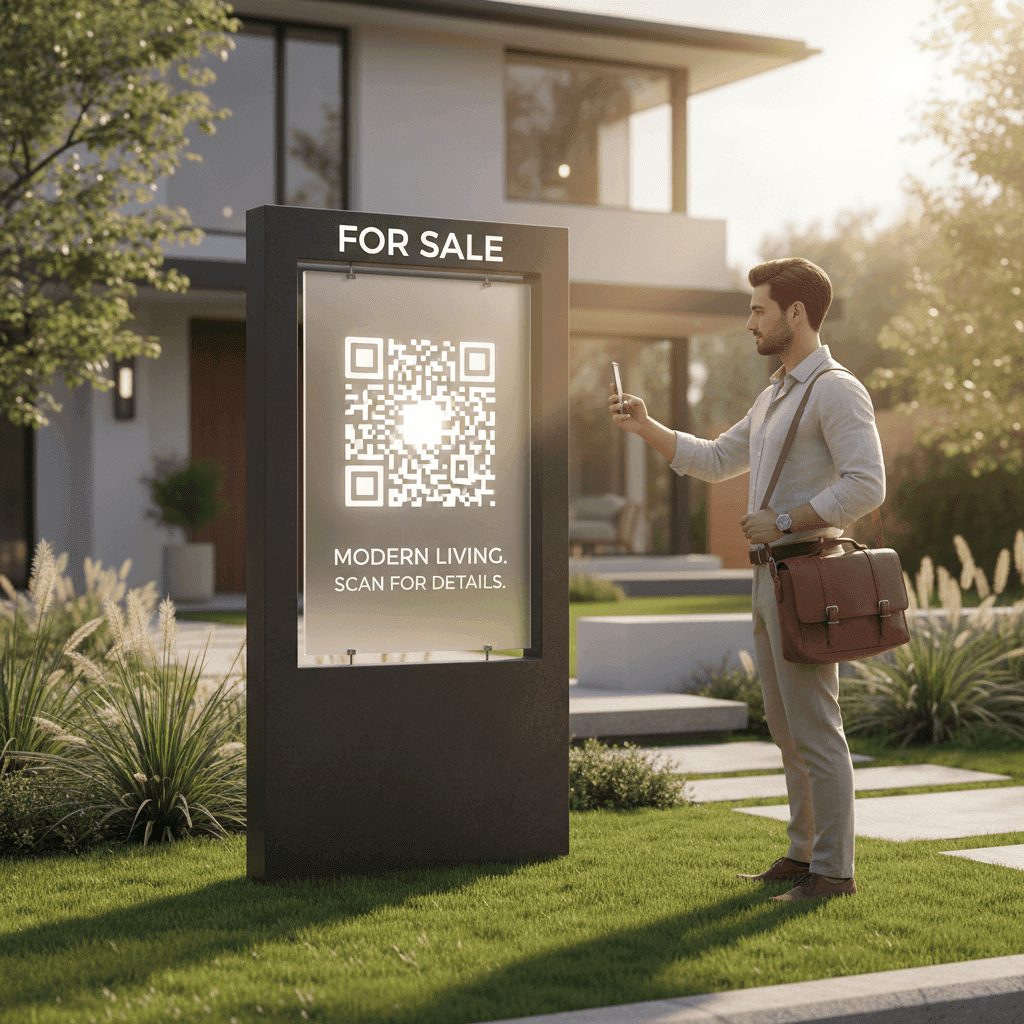
When a buyer stops to look at your yard sign, they're already expressing active interest. A QR code with compelling copy like "Scan for photos, pricing, and tour" removes all friction compared to phone numbers or long URLs.
Place the code in the bottom-right corner of your sign for easy right-handed scanning. Use high contrast colors, generous white space around the code, and make it at least 1.2–1.6 inches minimum size.
Your sign viewers are already engaged. Give them an instant path to your best content.
Tracking Analytics
Dynamic QR codes with analytics show you total scans, repeat scans, time of day patterns, and location heatmaps. You'll know which neighborhoods generate the most interest and can optimize your sign placements accordingly.
A/B test different calls to action: "Scan for price and photos" versus "Scan for a 60-second video tour." Track both scan rates and form completion rates to find your highest-converting approach.
Drive sign traffic to a 30–45 second vertical video made with Peachgum. Short videos increase watch-through rates and social shares, boosting your follow-up engagement.
Sources:
QR Code Open House: A Modern Approach That Captures Leads
Streamlined Registration Processes
Use QR codes on your open house invitations and door signage to link to a simple RSVP or registration landing page. Capture names, emails, and phone numbers before or at the door.
Set up an automated email flow: when someone submits the form, they immediately receive the property packet and private tour link. No manual work required.
This approach works because it meets buyers where they are: on their phones, expecting instant access to information.
Enhancing Open House Experiences
Place table tents throughout the property with "Scan for virtual tour, features list, and neighborhood comps." Visitors can easily revisit the content later when they're making decisions.
Send QR-enabled follow-ups via text or email after the event. Make it easy for interested buyers to re-access all your materials and tours.
After your open house, send a follow-up QR code linking to a 60-second "Open House Recap" or neighborhood highlights reel made in Peachgum. This re-engages visitors and can nudge them toward second showings.
Sources:
Creative QR Code Real Estate Ideas That Win Attention
WhatsApp QR codes open a pre-filled chat for instant questions. SMS QR codes work great on postcards and door hangers with messages like "Hi, I'm interested in this property" already filled in.
Image QR codes can showcase before-and-after renovation comparisons for flip properties. Create community highlight galleries featuring parks, schools, restaurants, and amenities for buyers relocating to unfamiliar areas.
Video-first QR codes pair each listing with a 45–60 second vertical sizzle reel. This meets buyers where they already browse: on mobile and social media.
Remember to include your brokerage name and license details on print materials adjacent to the QR code as required by local regulations.
Try these micro-examples:
- Just Listed postcards: "Scan for 60-second tour plus floor plan"
- For-Sale sign rider: "Scan for real-time price drops"
- Builder model homes: "Scan for spec list and current incentives"
Sources:
Implementing QR Codes Real Estate: Step-by-Step and Best Practices
Step 1: Pick your destination. Link to a single-property page or unbranded tour page. Ensure mobile-first design and sub-3-second load times.
Step 2: Create dynamic QR codes. Dynamic codes let you change URLs without reprinting materials. You'll also get analytics on scans, devices, and locations.
Step 3: Design for scannability. Use high contrast colors, include quiet zones around the code, keep URLs short, and test at actual print size and scanning distance.
Step 4: Add clear calls to action and value propositions. Test copy like "Scan for video tour plus pricing," "Scan to RSVP," or "Scan for neighborhood guide."
Step 5: Distribute across all channels. Use QR codes on yard signs and riders, flyers, mailers, door hangers, bus benches, event banners, and open house check-in materials.
Step 6: Measure and optimize. Track scan-through to page views, video watch rates, and lead form completions. Run weekly experiments on CTA language and placement.
Accessibility fallback: Add a short URL under the QR code for people who prefer not to scan. Include phone and text options as alternatives.
Use Peachgum to turn your listing photos into cinematic short-form videos in minutes. No editing skills needed, with export-ready formats for Instagram, TikTok, and YouTube Shorts. This saves time and money compared to hiring a videographer.
Sources:
Common Questions About QR Codes in Real Estate
Do QR codes actually get engagement? Yes. They average 37% click-through rates for QR-initiated journeys compared to just 2–5% for display ads.
Are buyers comfortable scanning QR codes? Definitely. 79% of smartphone users scanned a QR code in the past year, with 59% scanning daily.
Where should my QR code point? To a fast, mobile-first destination with video, photos, pricing, and an easy contact method like a form, WhatsApp, or SMS.
Should I use dynamic or static codes? Dynamic codes for analytics and updatable links. Only use static codes for permanent information that never changes.
What if there's no cell signal at the property? Include a short URL and a "Text '123 Main Street' to [your number]" fallback on your signage. Design lightweight pages that work with low bandwidth.
How do I measure success? Track scans per placement, video watch-through rates, lead capture rates, and appointments set from QR code traffic.
Sources:
Start Using QR Codes to Bridge Offline Interest and Online Conversions
QR codes connect offline attention to the mobile-first content that buyers actually consume, especially short video. They give you measurable analytics to double down on what works and optimize what doesn't.
Start with one listing this week. Add a QR code to your yard sign, link it to a fast property page with a 60-second video, and A/B test your call-to-action copy for two weeks. You'll quickly see which approaches generate the most scans and leads.
The gap between offline marketing spend and online lead generation doesn't have to exist. QR codes bridge that gap with proven technology that buyers already use daily.
Try creating a 60-second listing video for your next QR code campaign with Peachgum. No editing skills required, with export-ready formats for Instagram Reels, TikTok, and YouTube Shorts.